If you’re new to Japanese food or visiting a Japanese restaurant for the first time in Dubai, you’ve probably heard of sushi and sashimi. They’re both tasty, healthy, and beautifully prepared, but which one should you try first?
This guide will help you understand the difference between sushi and sashimi, how they’re served, what they taste like, and why both are popular. Whether you’re ordering lunch at Ram & Roll or exploring a full Japanese menu for the first time, this guide is the perfect place to start.
What Is Sushi?
Sushi is one of the most well-known Japanese dishes around the world. It’s made with vinegared rice and usually comes with seafood, vegetables, or other ingredients. Sushi can be raw or cooked, rolled or shaped by hand.
At Ram & Roll, we serve sushi in the form of fresh handrolls made with top-quality ingredients like tuna, salmon, and shrimp. Each handroll is packed with flavor and easy to eat, even for beginners. You can explore our Sushi Handrolls for more.
What Is Sashimi?
Sashimi is thinly sliced raw fish served without rice. Unlike sushi, it focuses on the pure taste and texture of the fish itself. Common types of sashimi include tuna, salmon, yellowtail, and octopus.
Sashimi is usually served with soy sauce, wasabi, and sometimes slices of daikon (white radish). It’s a favorite for those who love clean, fresh flavors.
Sushi vs Sashimi: The Big Difference
When comparing sushi vs sashimi, the main difference is the rice. Sushi includes vinegared rice, while sashimi is just the sliced raw fish or seafood.
If you’re wondering about the difference between sushi and sashimi, it’s actually quite simple. Sushi includes vinegared rice combined with various toppings, which may include raw fish, vegetables, or other ingredients. Sashimi, on the other hand, is just thinly sliced raw fish served without rice.
Both are delicious, but the taste and texture will be very different. By this point, we are sure you are clear about the sushi and sashimi difference.
Which One Should You Try First?
If you’re trying Japanese food for the first time, sushi might be the easier choice. The rice adds a familiar texture, and some sushi options are even cooked, like shrimp or tempura rolls. Sushi also comes in different forms, including handrolls and nigiri, giving you more variety.
But if you’re a seafood lover and want to explore pure flavors, sashimi is a great option. It lets you enjoy the quality of the fish on its own, simple, fresh, and elegant.
What Do Sushi and Sashimi Taste Like?
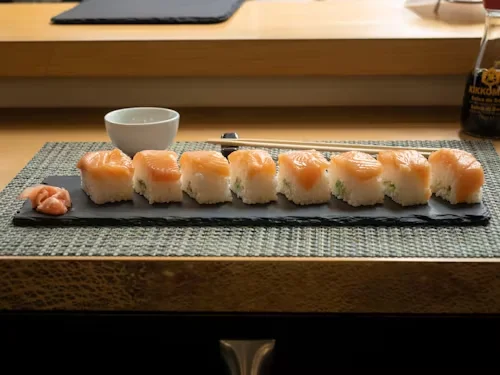
Sushi has more layers of flavor. The rice is slightly sweet and tangy, the toppings can be creamy, crispy, or rich, and sauces like soy or spicy mayo add even more taste.
Sashimi, on the other hand, is clean and pure. You’ll taste the fish directly, with only a dip of soy sauce or a touch of wasabi. It’s fresh, smooth, and often buttery in texture, depending on the fish.
How Are Sushi and Sashimi Served?
Both dishes are beautifully presented. Sushi is often rolled in seaweed or shaped into small bite-sized pieces. It may come with pickled ginger, wasabi, and dipping sauces.
Sashimi is served on a small plate with thin slices of fish neatly arranged. It may be served over shredded daikon or on a chilled plate to keep the fish fresh.
At Ram & Roll, sushi handrolls are made to order, using only the freshest ingredients. While sashimi is not currently featured as a separate menu item, many diners enjoy sushi handrolls that feature sashimi-style cuts inside.
Health Benefits of Sushi and Sashimi
Both sashimi and sushi are healthy choices. They’re low in fat, high in protein, and often rich in omega-3 fatty acids. The fish used in these dishes is full of nutrients like vitamin D, selenium, and B vitamins.
If you’re watching your carbs, sashimi may be the better pick since it doesn’t include rice. But if you want something more filling, sushi is a great option.
Where to Try Sushi in Dubai?
Looking for delicious sushi in Dubai? Ram & Roll in Downtown Dubai offers hand-rolled sushi made with care and quality. The restaurant specializes in famous Japanese food like sushi, ramen, and even breakfast sets that showcase Japanese flavors.
Whether you’re dining solo or with friends, Ram & Roll offers a warm, modern space with flavors straight from Japan.
Final Thoughts
Trying sashimi vs sushi is a fun and tasty way to explore Japanese culture in Dubai. Sushi gives you more variety and flavor combinations, while sashimi lets you enjoy the pure, clean taste of the fish.
There’s no wrong choice, just go with what feels right for you. Whether it’s your first time or you’re a long-time fan of sushi and sashimi, Ram & Roll is here to serve it fresh, delicious, and just how you like it.
Ready to dig in? Reserve your table today and enjoy the best of Japan in the heart of Dubai.To reserve your table, call +999 999 99 99 or email contact@ramnroll.co. Walk-ins are welcome, but reservations are recommended, especially on weekends.